
Lower Elementary Program
Grades 1-2
8:00 AM - 3:15 PM
Mead’s Lower Elementary program is built on the foundations built in the Early Childhood classrooms and fosters the ongoing development of the child through social interactions with the community and an intellectually challenging environment. Children of this age are fueled by imagination and begin to make discoveries in all subject areas including language, math and sciences, art, foreign language and the natural world.
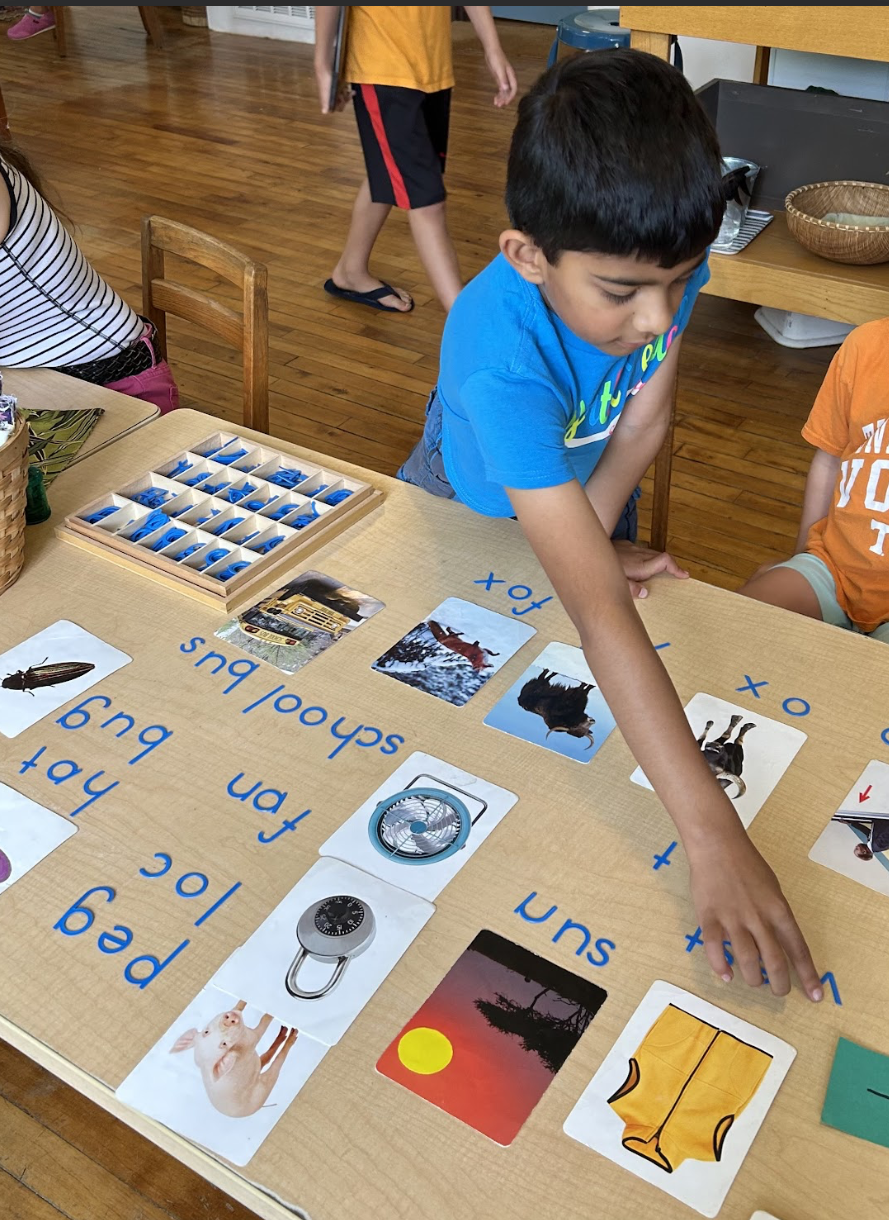
Our Lower Elementary program serves students ages 6-8, first and second grade. Lessons in the Lower Elementary classroom are given in both small groups and individually giving each student ample opportunity to express interests, ask questions and make meaningful contributions.
The elementary course of studies includes life and physical sciences, history, geography, physical education, English language, mathematics, geometry, art, music, Spanish and gardening. Classroom work is enhanced through the elementary ‘going out’ experience of trips outside the school to local museums, nature centers, libraries and theatres.
The Montessori Elementary curriculum fosters students who have a strong feeling of connectedness to all humanity. They have an appreciation of the contributions of their ancestors, the natural world and of the diverse cultures of the countries and the world. They are well prepared to be contributing members of society.
Complete Our Lower Elementary Application
Curriculum Details
Our Elementary classes are fully equipped with complete sets of Montessori materials.
Art
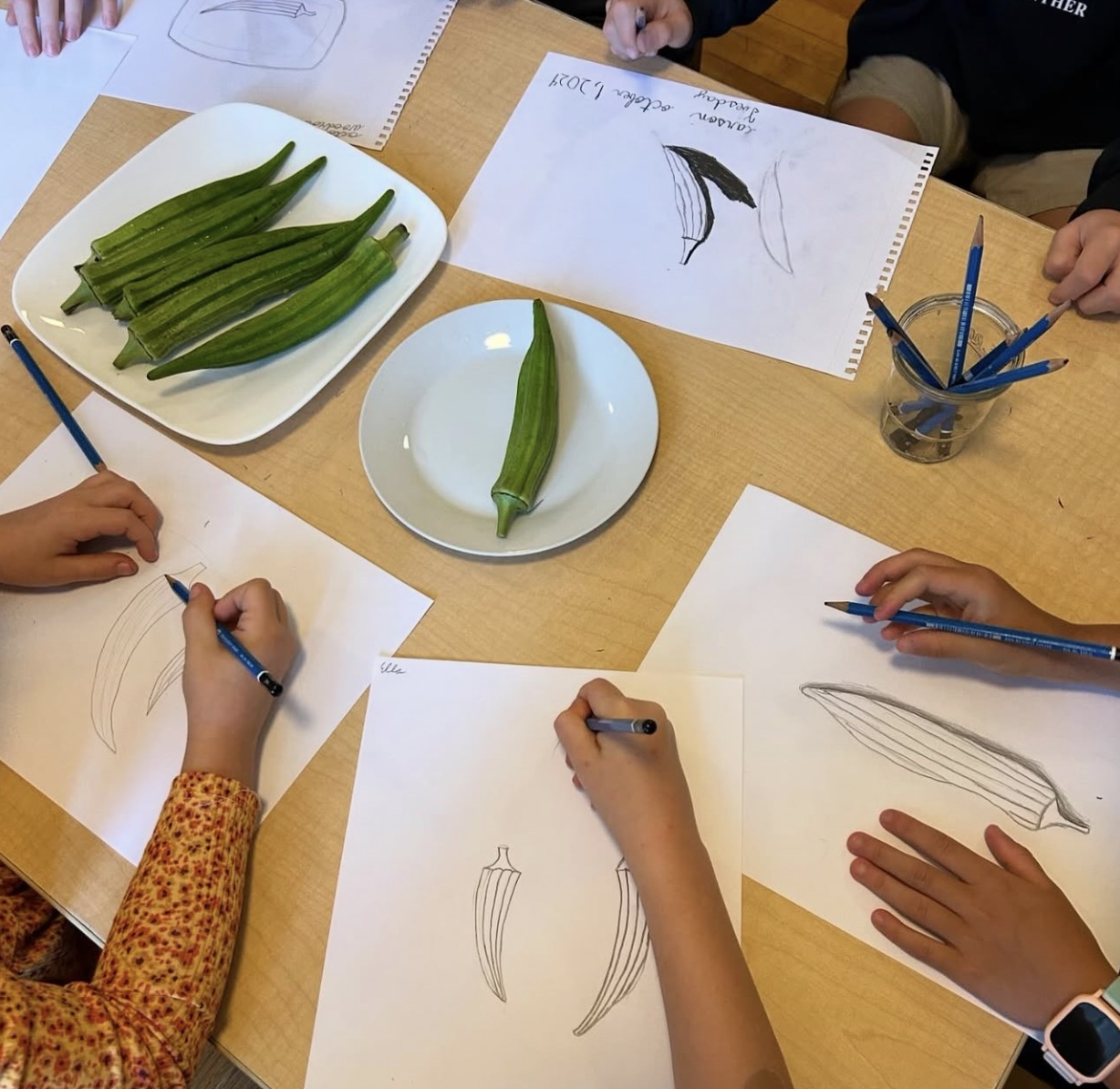
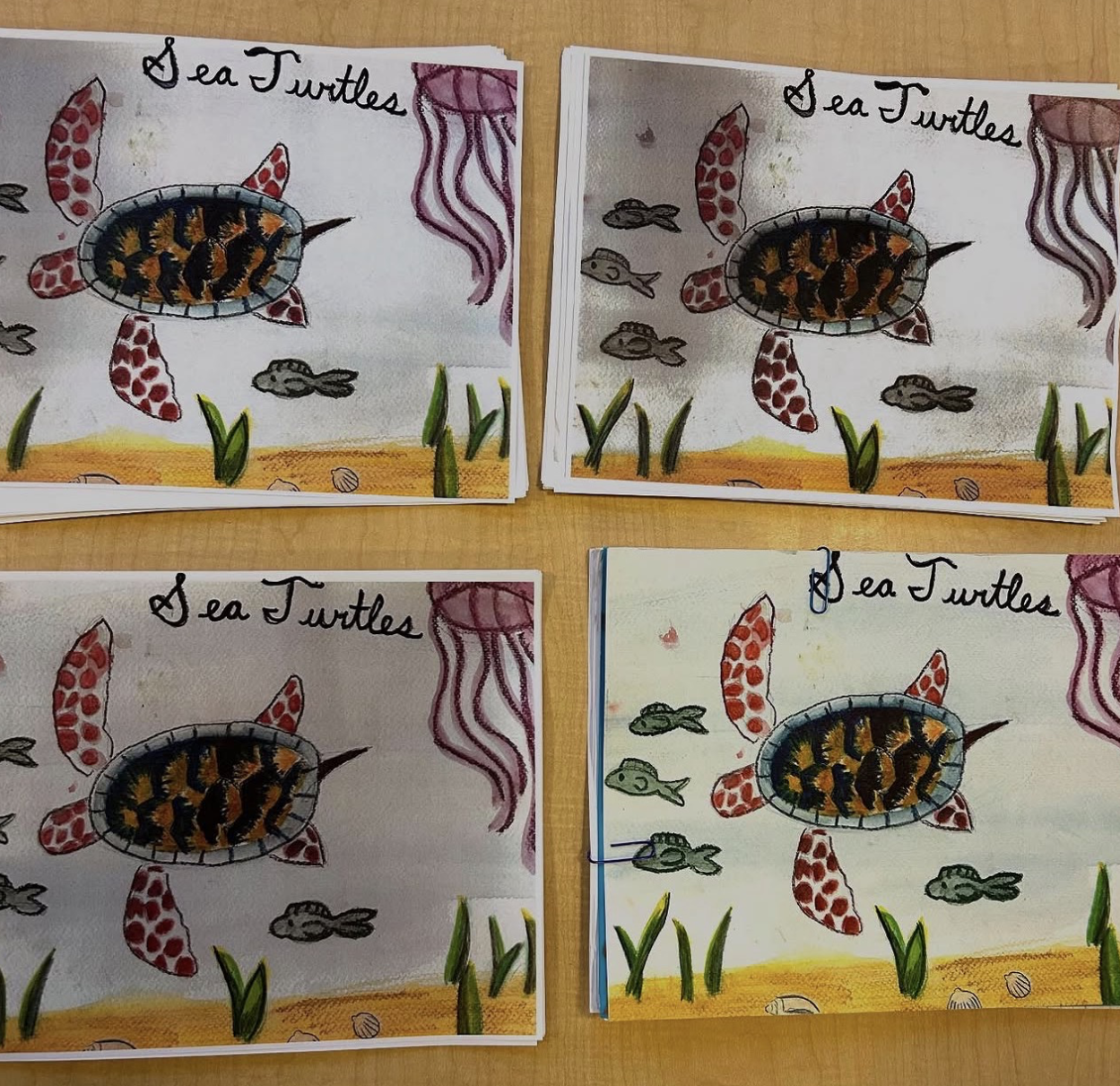
Crayons, tempera paint, water colors, charcoal, sketching, clay, sewing, embroidery, collage, printing, still life and landscape drawing, art history study, clay sculpting, weaving
History
Time telling, clock and calendar work, fundamental needs of a man, agricultural revolution, civics, election process, three branches of government
Language Arts
Literature study, reading, mechanics and conventions of writing, parts of speech and further study of grammar, sentence analysis, paragraph writing, personal narrative, expository writing with notetaking, letter writing, poetry.
Math and Geometry
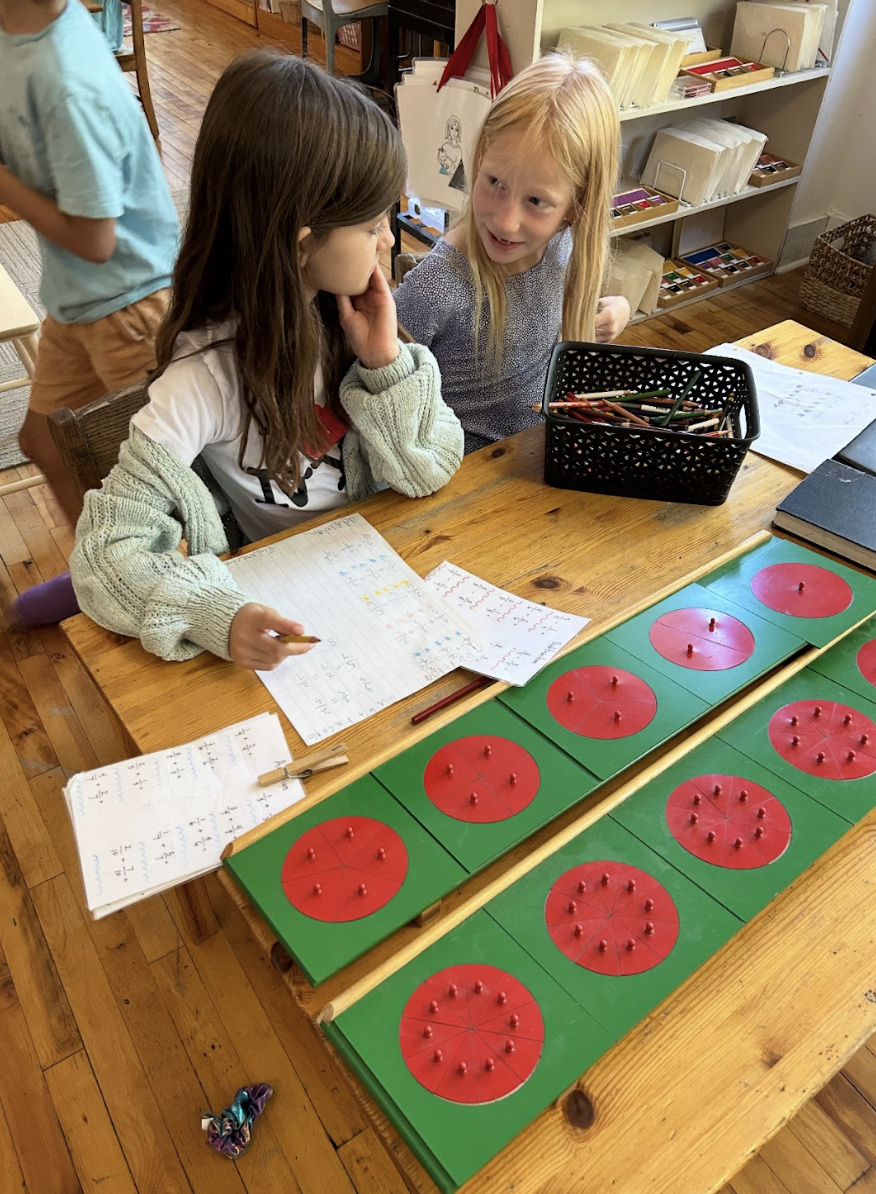
History of numbers, place value, operations, divisibility, multiple factors, fractions, decimal fractions, squaring and cubing, integers, currency, measurement, square root, simple word problems, probability, graphing, geometry nomenclature, equivalence, congruence and similarity, area
Science
Sun and earth, planetary study, botany, zoology, ecology, concepts of globe and map, land and water forms, telling time
Social Studies
Exposure to other cultures, citizenship and community, exposure to holidays and influential people throughout history, learning names and locations of continents and states, current events, map skills
Research and Reference Skills
Using non-fiction reference books and materials for research and reference